Taller de redacción de artículos científicos

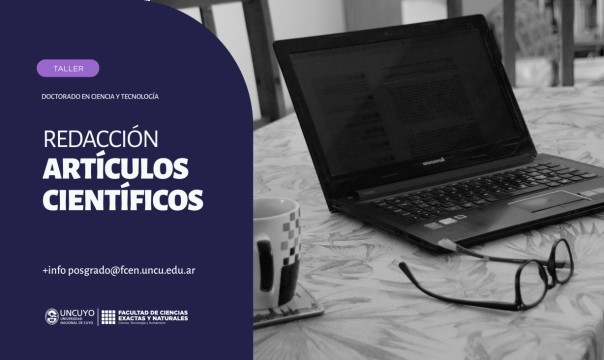
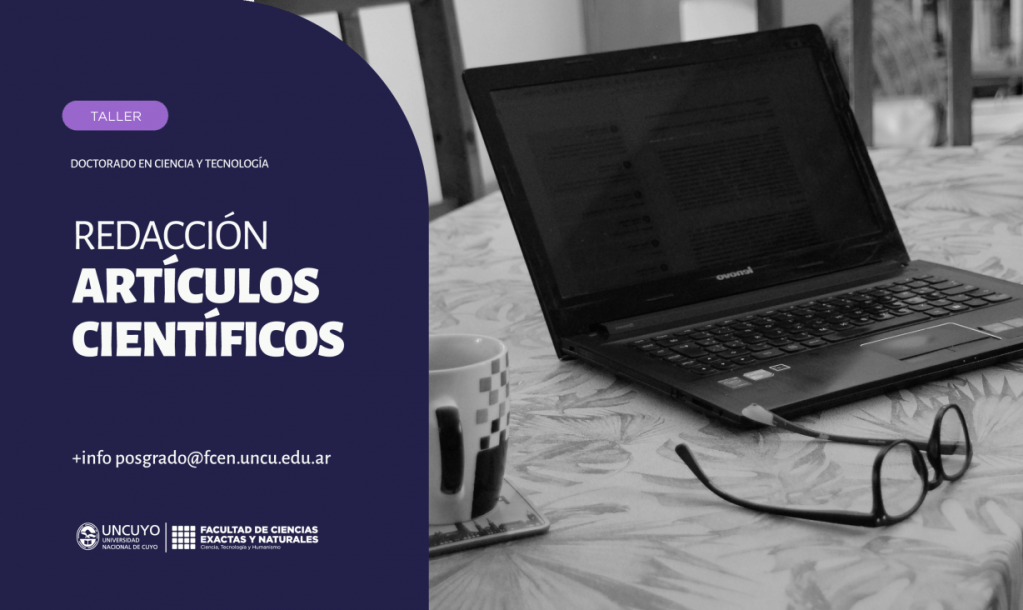
Docentes: María Virginia Sánchez Puerta y Diego Vázquez.

Contenidos y actividades prácticas: Redacción efectiva; elaboración de un artículo en sus distintas etapas: planificación, borrador, revisión y pulido del artículo, versión final; carta al editor; cómo elegir una revista y responder a los revisores. Durante el curso cada participante escribirá un artículo científico para el que ya tenga resultados representados en figuras y tablas, trabajando en las distintas etapas de desarrollo de un artículo; también escribirá la carta al editor y la respuesta a los revisores del artículo.

Modalidad de supervisión y evaluación: Puesta en común de las actividades y lectura del material escrito por parte de docentes y pares. Evaluación continua durante el desarrollo de las actividades prácticas.

Cursado: lunes y miércoles de 8.30 a 15.30, Sala Payunia, CCT CONICET Mendoza, del lunes 20 de octubre al miércoles 12 de noviembre de 2025.

Inscripción: Enviar ficha de inscripción a posgrado@fcen.uncu.edu.ar hasta el 19 de septiembre.

Cupo: mínimo 5 estudiantes, máximo 10 estudiantes.

Carga horaria: 75 hs totales (45 presenciales, 30 no presenciales).

Requisitos para realizar el curso: Contar con resultados de su investigación suficientes para redactar un artículo científico (preferentemente en ciencias biológicas y disciplinas afines), conocimientos avanzados de inglés (poder leer literatura en inglés), computadora personal para trabajar durante el curso.

Tagged with:
Posted in courses

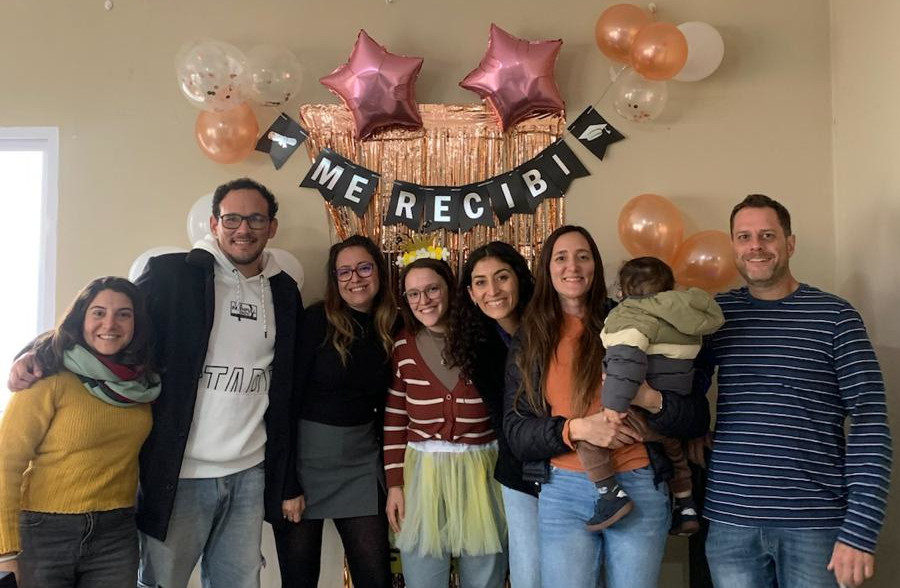
Congratulations Euge and María for successfully defending their PhD theses!

Time for a double celebration in our group: recently, Eugenia Vázquez Novoa defended her PhD thesis on the effects of goat grazing on forest biodiversity and resilience, and even more recently, María Pascual Tudanca defended her PhD thesis on the ecological impacts of managed honeybees. Congratulations both!

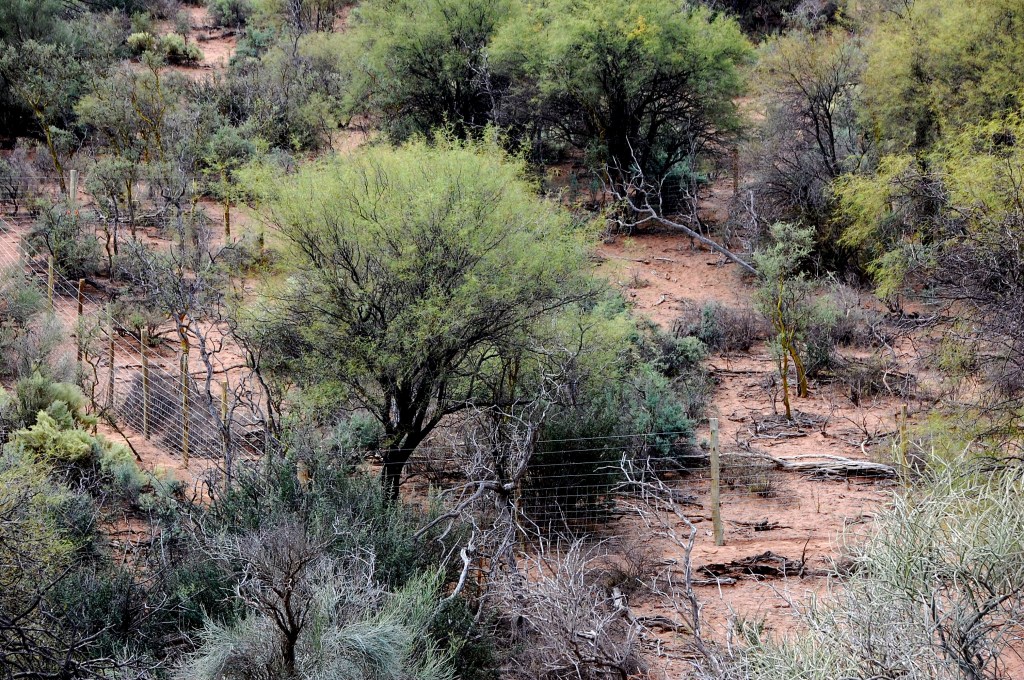
Eugenia explored the response of an arid forest community to different intensities to goat grazing. She worked in four livestock settlements in Telteca Forest Reserve, north-eastern Mendoza Province, Argentina, where we established paired permanent plots near and far from the settlements. Her results indicate that grazing intensity influences plant community structure, for example leading to decreased taxonomic, phylogenetic, and functional diversity at high grazing intensities. Based on her results, Eugenia advocates an integrated, sustainable management approach that includes livestock rotation to curb grazing intensity.

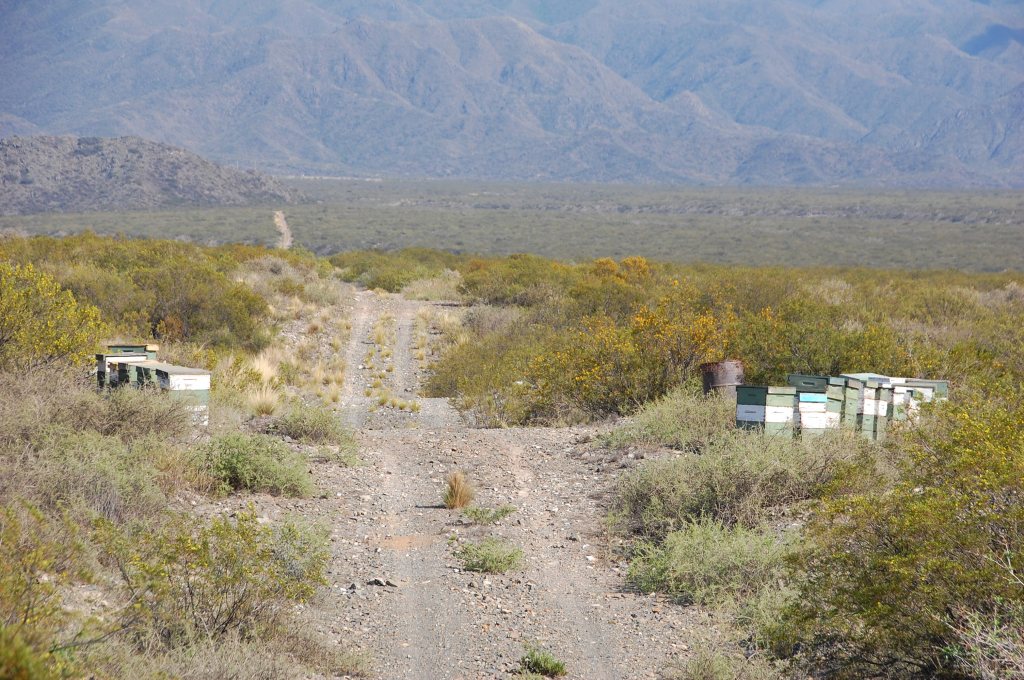
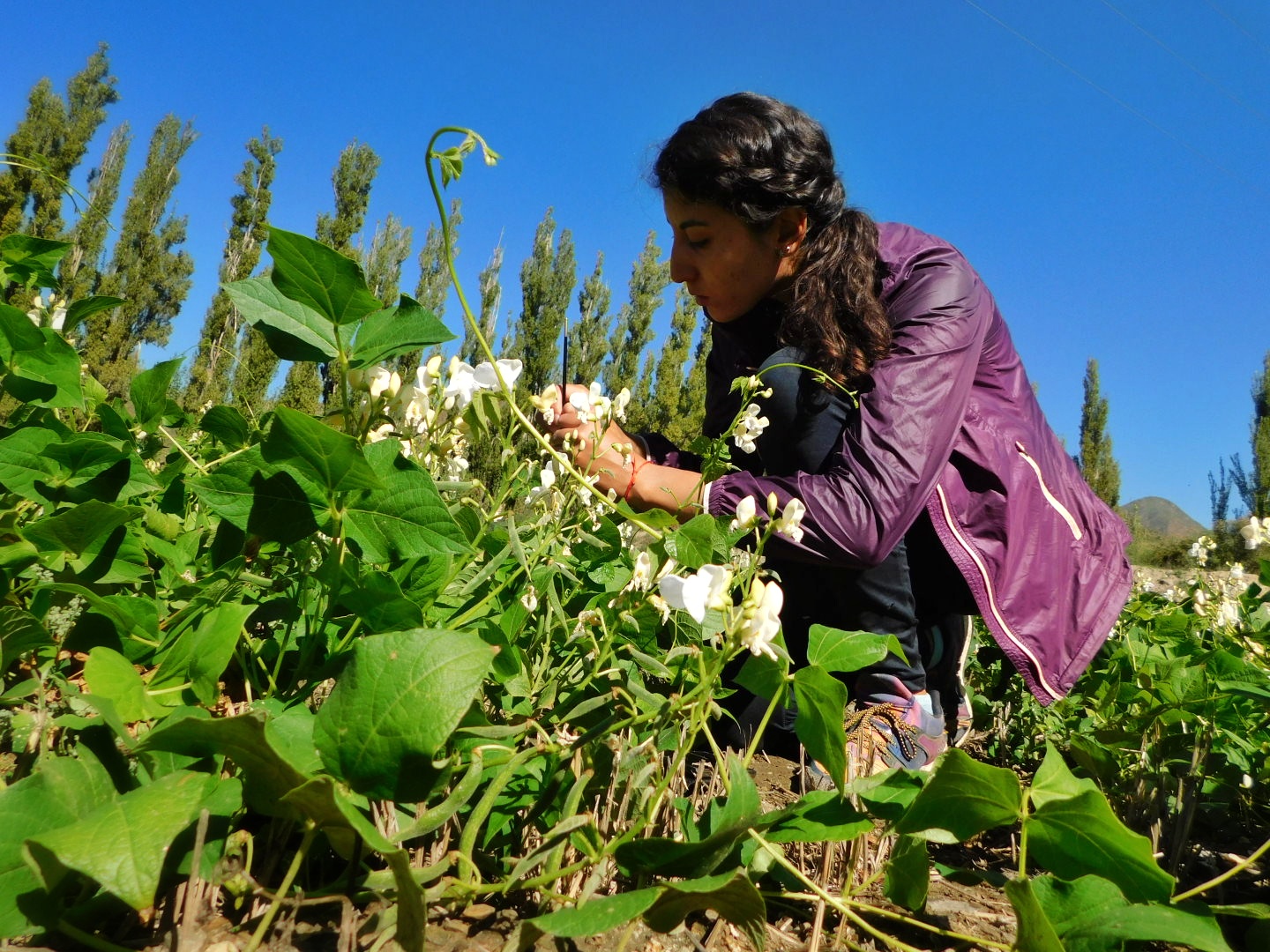
In turn, María studied the impact of managed honeybee hives on plants, pollinators, and their interactions in the Villavicencio Nature Reserve, Mendoza, Argentina. Working at paired sites close to and far from managed honeybee hives, she found that managed hives have positive effect on the reproduction of a self-compatible plant species and negative effects on the reproduction of the two self-incompatible species. Honeybees also led to decreased pollen dispersal distance, which may affect its male reproductive success. She also observed that managed honeybee hives caused a shift in the pollen used by solitarty bees in their nests, as well as increased nest abundance in some of the species studied. Finally, managed hives altered plant-pollinator interactions through species composition and increased the specialization of wood-nesting bees. Her results lead to several conservation and management recommendations regarding the interannual rotation of hive locations, the number of hives per site, and the need to monitor native plant and pollinators. If you want to know more about María’s research, check out her papers here, here, and here. Also, in this video she tells a bit more about her research.

¡Felicitaciones Euge y María!

Tagged with: , , ,
Posted in lab members, theses

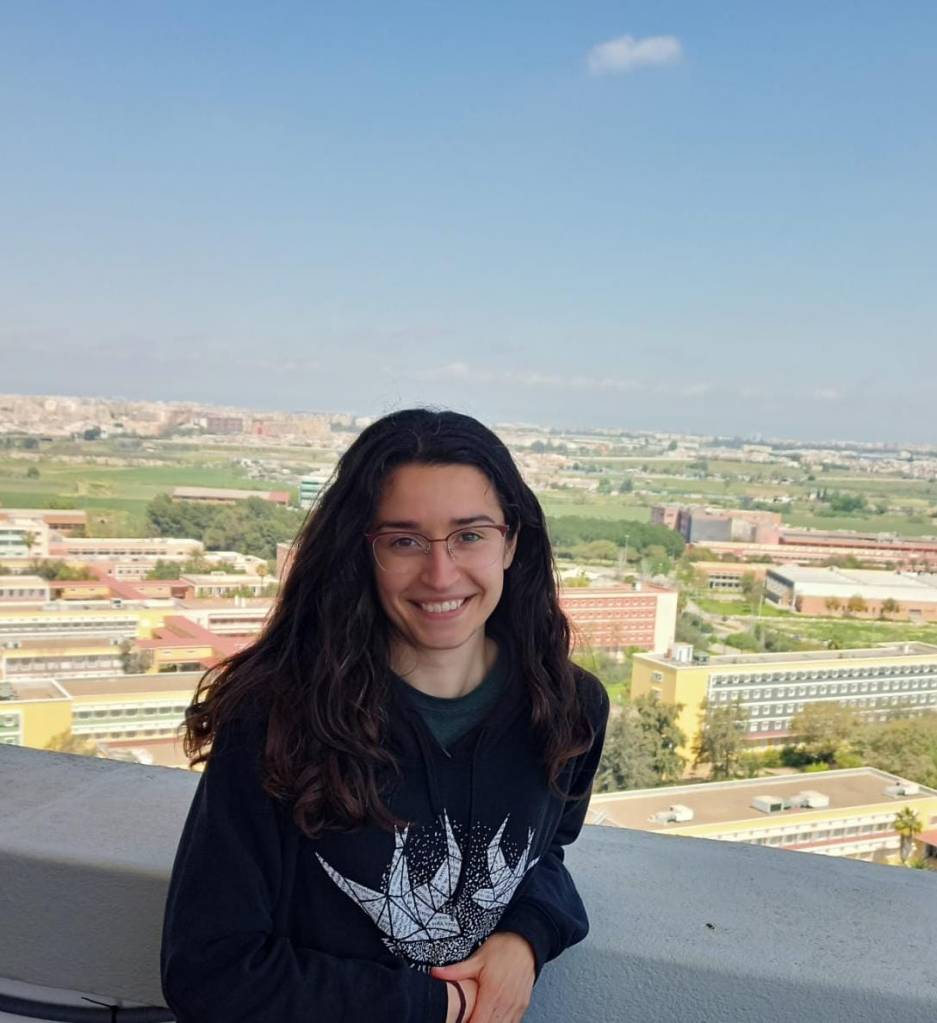
Patricia Moreno Colom is visiting us from Valencia, Spain

Patricia Moreno Colom, a PhD student at the University of Valencia, Spain, is spending three months with our group, collaborating with several group members to study plant demography, plant-plant and plant-seed disperser interactions using multilayer networks. The project also includes Patricia’s mentor Alicia Montesinos and Shai Pilosof from Ben-Gurion University, Israel.

Tagged with:
Posted in visitors

Welcome Lara Quaglini!

We are happy to host Lara Quaglini, a PhD student from the Università degli Studi di Milano-Bicocca. Lara is working on the drivers of invasion success of invasive plants and their impact on plant and soil biodiversity, mentored by Sandra Citterio, Rodolfo Gentili and Florencia Yannelli. During her stay in Mendoza Lara is collaborating with Florencia on a conceptual framework for the effective management of an invasive plant, Senecio inaequidens, to guide restoration actions.

Tagged with:
Posted in visitors

James Desaegher is visiting us from France

Our colleague James Deseagher is visiting us until the end of July. James is a researcher at the French National Institute for Agriculture, Food, and Environment (INRAE) in Avignon, France. He is collaborating with Diego in a functional classification of flower morphology to predict plant-pollinator interactions. We look forward for several weeks of intense collaboration!

Tagged with:
Posted in visitors

Writing in the mountains: back from our annual group retreat

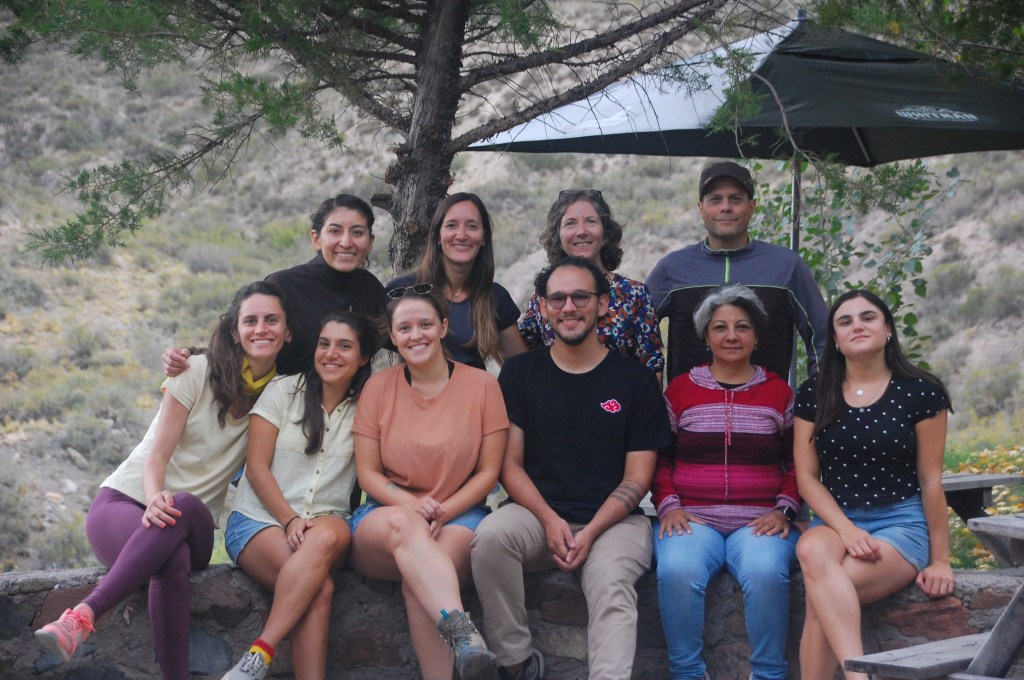
This past week we had our annual group retreat, first time after the COVID pandemic. This year we planned a writing retreat, with several hours of writing every day, plus group discussions, hikes, board games, and shared meals.

For the retreat we stayed at Alejandra Medero’s house in Las Carditas (¡gracias Ale!), a mountain village 80 km from Mendoza city. Each day we wrote in the morning, each group member worked on their own paper, thesis chapter, grant proposal, or whatever they wanted to write. We set goals at the start of the retreat and reported regularly on our progress. In the afternoons we had a discussion on writing tips, a debate on how to go about addressing applied questions using what we have learned with our own research, a couple of hikes, and an excursion to a local brewery. During the evenings we played board games while sharing a bottle of wine or two. All in all, a productive week, a nice break from the daily routine, and a great way to stimulate group cohesion.

Tagged with:
Posted in meetings

Congratulations Miranda Lede for defending her thesis on the influence of climate and phenology on solitary bees

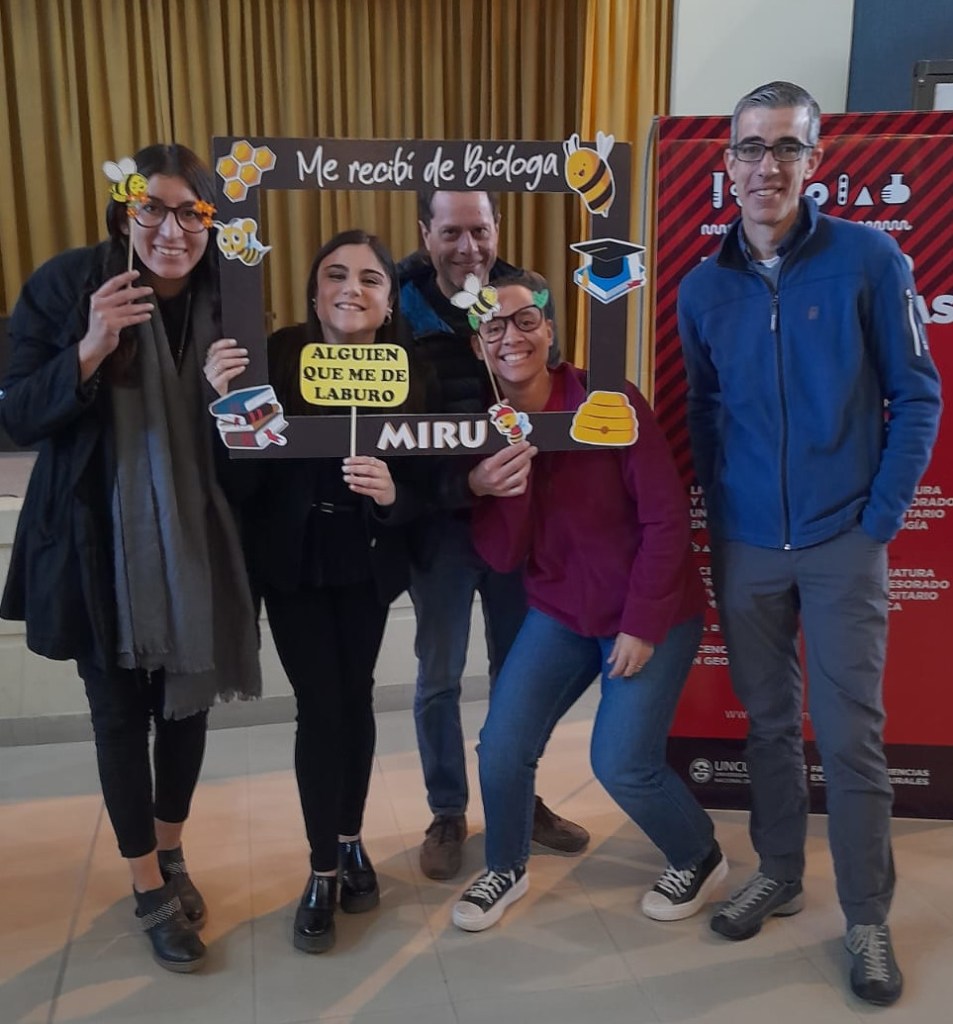
Yesterday, Miranda Lede defended her undergraduate (licenciatura) thesis at the Faculty of Exact and Natural Sciences of the National University of Cuyo. Miranda was interested in how climate and mismatches in the timing (phenology) of flowering and bee nesting influenced the demography of solitary bees. To address this question she used data from our group’s database on flowering and solitary bee nesting between 2006 and 2019. She worked in Villavicencio Nature Reserve, a private protected area north of the city of Mendoza. Her study was based on five species of solitary bees that fall in a gradient of specialization, from highly specialized species feeding mostly on pollen of a single plant species, to generalists feeding on several plant species. Miranda found that phenological mismatches and climate tend to influence the reproductive success of the most specialized bee species, while climate alone seems to influence the reproduction of the most generalized bees. The two examiners of the thesis praised Miranda for her excellent work. Congratulations Miranda!

Tagged with:
Posted in lab members, theses

Rosario Miranda defended her undergraduate thesis on the role of aggressive behavior on the structure of plant-pollinator networks

This morning Rosario Miranda defended her undergraduate (licenciatura) thesis at the Faculty of Exact and Natural Sciences of the National University of Cuyo. For this project she used mathematical models and computer simulations to explore how the presence of species with aggressive behavior influence plant and pollinator assemblages and their interactions. Her results indicate that the presence of aggressive species may have strong consequences on community structure.

Rosario is now off to Belgium to start a Master degree in tropical biodiversity and ecosystems, during which she will spend extended periods in Belgium, Madagascar, and French Guiana. Best wishes Rosario for this new stage in your career!

Tagged with:
Posted in lab members, theses, travel

New doctor in the group: Alisa (Lisi) Álvarez successfully defended her thesis

Alisa (Lisi) Álvarez defended today her doctoral thesis, an ecological study of plant invasions in mountain ecosystems of Mendoza. Congratulations Lisi for an outstanding study with important practical implications!

Lisi’s thesis combines observational and experimental studies to assess the effect of two drivers of plant invasions in the mountain environments of our region: tourist trails and livestock. As a whole, her results indicate that mountain hiking trails and livestock may facilitate plant invasions in the region. This work represents a valuable contribution to the understanding of the ecological processes regulating the spread of non-native plants, and offer useful information for management actions.

One of the chapters of Lisi’s thesis is already published as a journal article in Biological Invasions. And stay tuned for more publications coming soon!

Tagged with: , ,
Posted in lab members, theses